

The croton plant is one of the most visually striking foliage species you can grow at home, instantly recognizable for leaves splashed with red, orange, yellow, pink, and deep green. Botanically known as Codiaeum variegatum, croton has become a favorite ornamental choice for bright indoor corners, sunny patios, and warm tropical gardens. Its bold color palette delivers year-round visual interest without relying on flowers.
At the same time, croton is best understood as a decorative plant, not an edible or medicinal one. Its sap and plant parts can irritate skin, eyes, and the mouth if mishandled, so balanced care advice should always include safety guidance for children and pets. This article covers what croton is, its real benefits, how to care for it, and the precautions every grower should know.
What Is a Croton Plant?
Croton refers to Codiaeum variegatum, a broadleaf evergreen shrub in the family Euphorbiaceae. According to Plants of the World Online (Kew Science), the species is native to parts of tropical Asia and the western Pacific, where it grows as a warm-climate ornamental. The common garden name “croton” is widely used, although the true botanical genus Croton is a separate group of plants.
Growth Habit and Appearance
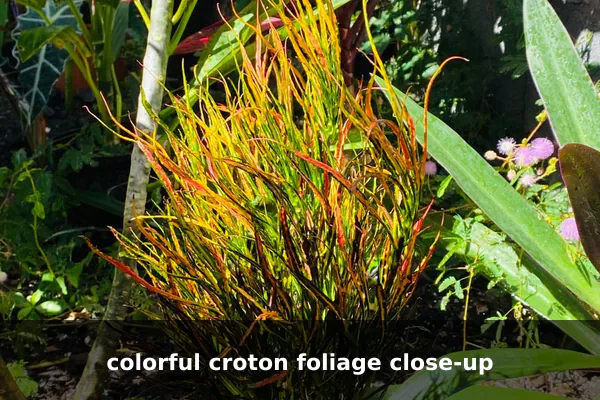
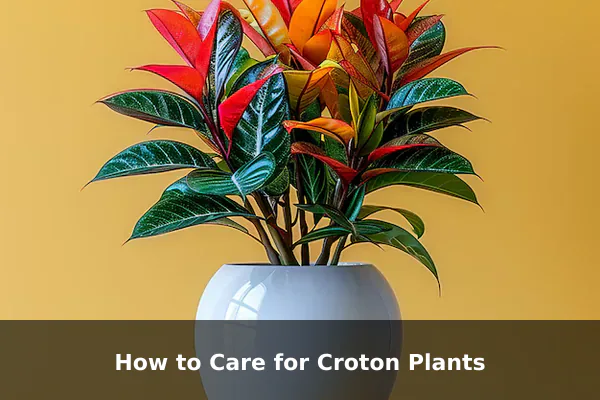
Garden croton typically grows as a multi-stemmed evergreen shrub with thick, leathery, glossy leaves. Indoors it usually stays compact, while in suitable tropical conditions it can become a larger landscape shrub. Leaves can be narrow, oval, lobed, twisted, or strap-shaped depending on the cultivar.
Main Benefits of Growing Croton
Croton’s appeal is primarily ornamental and lifestyle-based rather than medicinal. When chosen for the right setting, it can offer several practical benefits.
- Vivid foliage color: Few houseplants match croton’s mix of red, orange, yellow, and green tones, providing visual impact without flowers.
- Year-round interest: Because the color comes from leaves, the display continues across seasons in stable warm conditions.
- Container friendly: Croton adapts well to pots, making it useful for balconies, patios, and entryways.
- Landscape accent: In tropical and subtropical gardens it works as a hedge, border, or focal shrub, as noted by University of Florida IFAS Gardening Solutions.
- Learning value: Croton teaches new growers how light, humidity, and watering directly affect leaf color and health.
It is best to avoid overstating any health or air-purifying claims. Treat croton as a high-impact decorative plant rather than a wellness product.
Popular Croton Features and Varieties
Croton is famous for its diversity of leaf forms and color patterns. While exact cultivar names vary by nursery, you will commonly encounter:
- Broad oval leaves with yellow and green variegation.
- Narrow strap-like leaves in mixed red, orange, and burgundy.
- Twisted or curly leaves with bright yellow veining.
- Deeply lobed leaves with multicolored patches.
Color intensity often depends on light exposure. Plants kept in bright, indirect light usually show stronger contrast, while plants in low light tend to revert to mostly green leaves.
How to Care for Croton Plants
Croton is not difficult, but it is particular. Care guidance from UF IFAS and NC State Extension highlights stable warmth, bright light, and consistent moisture as the keys to success.
Light
Provide bright, indirect light indoors, or a few hours of gentle direct sun. Outdoors, partial sun usually produces the best color in warm climates.
Watering
Keep the soil evenly moist during active growth and slightly drier in cooler months. Avoid soggy roots and avoid letting the pot dry out completely, as both extremes can cause leaf drop.
Humidity and Temperature
Croton prefers warm temperatures and moderate to high humidity. It is sensitive to cold drafts and sudden temperature drops. Protect it from temperatures near or below the cool threshold typical of subtropical winters.
Soil and Fertilizer
Use a well-draining, organic-rich potting mix. Feed lightly during the growing season with a balanced fertilizer, following the product label.
Pruning
Prune to shape the plant and encourage bushier growth. Wear gloves; the milky sap can irritate skin.
Common Croton Problems
Most croton issues trace back to environment, not disease. Watch for these patterns:
- Leaf drop: Often caused by cold drafts, sudden moves, underwatering, or overwatering.
- Dull or fading color: Usually a sign of insufficient light.
- Brown leaf edges: Low humidity or inconsistent watering.
- Pests: Spider mites, mealybugs, and scale can appear, especially in dry indoor air.
- Transplant shock: Expect temporary leaf loss after repotting or relocation.
Propagation and Maintenance Tips
Croton is commonly propagated from stem cuttings. Take a healthy cutting with several leaves, allow the cut end to dry briefly, and plant it in moist, well-draining medium. Keep warm and humid until roots establish.
Because the sap can irritate skin and eyes, always:
- Wear gloves and long sleeves when pruning or taking cuttings.
- Clean blades with soap and water after use.
- Avoid touching your face while handling cut stems.
- Wash hands thoroughly when finished.
Croton Toxicity and Pet Safety
Safety is a critical part of any honest croton guide. NC State Extension classifies croton as toxic, and the Queensland Poisons Information Centre lists Codiaeum variegatum as a plant capable of causing skin and oral irritation. The Hong Kong Hospital Authority’s Toxicology Reference Laboratory atlas attributes croton’s irritant action to diterpene ester compounds in the sap.
For People
Skin contact with the sap may cause irritation or contact dermatitis in sensitive individuals. Eye contact can cause stinging and inflammation. Chewing or swallowing plant parts may lead to mouth irritation, nausea, or vomiting. If significant exposure occurs, contact a poison information service or medical professional for advice.
For Cats, Dogs, and Other Pets
Croton is generally considered unsafe for pets. Ingestion can lead to drooling, oral discomfort, vomiting, or other digestive upset. Keep plants out of reach of curious animals, and contact a veterinarian if your pet has chewed any part of the plant.
For Children
Place croton away from areas where small children play. Teach household members not to handle broken stems without protection.
Best Places to Use Croton at Home or in the Garden
With safety in mind, croton fits many attractive settings:
- Bright indoor corners near east- or south-facing windows.
- Covered patios and balconies in warm seasons.
- Entryway accents on shelves or plant stands away from pets.
- Mixed tropical beds as a colorful midground shrub.
- Raised containers that keep foliage out of reach of children and animals.
Quick Facts About Croton Plant
- Scientific name: Codiaeum variegatum
- Family: Euphorbiaceae
- Plant type: Evergreen ornamental shrub
- Light: Bright, indirect to partial sun
- Watering: Evenly moist, never waterlogged
- Ornamental value: Vivid multicolored foliage
- Toxicity: Considered toxic to people and pets; sap can irritate skin and eyes
- Best use: Decorative indoor or warm-climate outdoor accent
Final Growing Advice
Croton is a rewarding plant when its needs are respected. Give it warmth, bright light, steady moisture, and stable conditions, and it will reward you with some of the most striking foliage available among common ornamental plants. At the same time, handle it responsibly: wear gloves when pruning, keep it away from children and pets, and never treat it as edible or medicinal. With those simple boundaries in place, croton can be a long-lasting, high-impact addition to your indoor space or tropical garden.
Official references
- Plants of the World Online, Kew Science: Codiaeum variegatum – Anchor source for accepted scientific name, taxonomy, synonyms, native range, distribution, and botanical classification.
- NC State Extension Gardener Plant Toolbox: Codiaeum variegatum – University extension profile covering identification, growth habit, human toxicity, contact dermatitis, symptoms, toxic principles, and poisonous plant parts.
- University of Florida IFAS Gardening Solutions: Crotons – University horticulture guidance for croton characteristics, indoor/outdoor use, care, propagation, and caution around children and pets.
- Queensland Poisons Information Centre: Codiaeum – Government poison-information profile for Codiaeum variegatum, including toxicity status, skin/eye irritation, oral symptoms, and emergency exposure advice.
- Hospital Authority Toxicology Reference Laboratory: Atlas of Poisonous Plants in Hong Kong – Codiaeum variegatum – Clinical toxicology reference covering poisonous parts, diterpene ester constituents, poisoning features, identification, and medicinal-use cautions.
